You do not need to spend hundreds to upgrade your daily tech. These are the highest-rated gadgets under $50 on Amazon - all backed by tens of thousands of real customer reviews, not marketing copy.
Quick Picks
| Product | Best For |
|---|---|
| JBL Flip 5 | Best Portable Speaker |
| Amazon Echo Pop | Best Smart Speaker |
| Anker 20000mAh Power Bank | Best Power Bank |
| Amazon Basics Dumbbells | Best Budget Fitness |
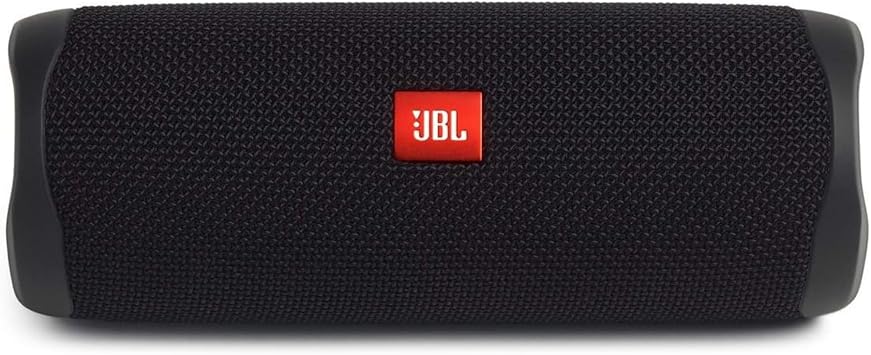
JBL Flip 5 Waterproof Portable Bluetooth Speaker - Best Overall
With one of the longest review histories in its class, this is one of the most trusted portable speakers on all of Amazon. Fully waterproof (IPX7), so it survives the pool, the beach, and the shower.
What buyers keep mentioning
- IPX7 waterproof rating
- 12 hours of battery life
- PartyBoost lets you pair two for stereo sound
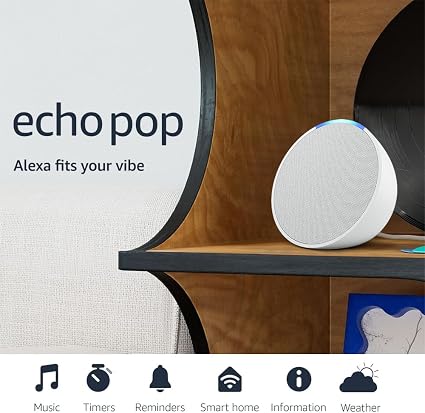
Amazon Echo Pop Smart Speaker - Best Smart Speaker
One of the most-reviewed smart speakers on Amazon. This is Amazon's smallest, most affordable Echo, and it is more than enough for music, timers, weather, and smart home control in a bedroom or kitchen.
What buyers keep mentioning
- Compact design fits anywhere
- Full Alexa functionality
- Great for a first smart speaker
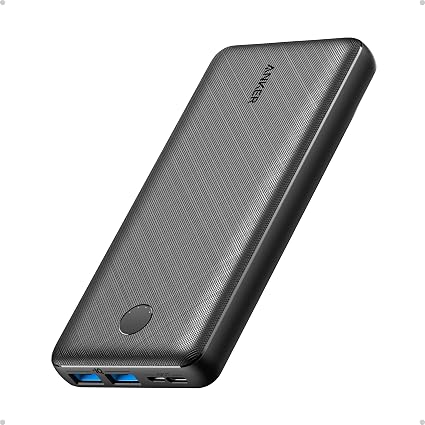
Anker 20000mAh Power Bank - Best Power Bank
A long review history and a battery big enough to charge a phone 4-5 times over. If you travel or commute, this is the one accessory that eliminates dead-battery anxiety.
What buyers keep mentioning
- 20,000mAh - multiple full charges
- Dual USB output for charging two devices
- Compact enough for a bag or glovebox
Amazon Basics Neoprene Dumbbell Hand Weights - Best Budget Fitness
Not tech, but the best-rated budget item in this price range that belongs on every "everyday essentials" list. Neoprene coating means no dropped-weight floor damage.
What buyers keep mentioning
- Neoprene coated - protects floors and hands
- Hexagonal shape prevents rolling
- Budget-priced
- Multiple weight options available

Our Verdict
If you only buy one thing from this list, make it the JBL Flip 5 - a review history that deep does not lie, and a good waterproof speaker gets used constantly. Pair it with the Anker power bank so your phone never dies mid-playlist.
We earn a small commission if you purchase through our links, at no extra cost to you. Prices and availability may change on Amazon.
How We Ranked These Picks
Under $50 is the hardest price band on Amazon to shop honestly. It is cheap enough that a bad purchase does not hurt much, which means buyers leave forgiving reviews, and it is cheap enough that sellers can afford to churn out listing after listing until one of them catches. The result is a category flooded with 4.7 and 4.8 star averages that mean almost nothing on their own. So we do not rank by star average. We rank by whether the star average is supported by enough independent purchases, over enough time, to be worth trusting.
The first filter we apply is review volume relative to the score. A high average from tens of thousands of ratings and the same average from a few hundred ratings are not the same claim. The first is a statement about a product that tens of thousands of strangers have lived with. The second is a statement about a launch window, a seller's friends, a coupon campaign, or a product that simply has not been around long enough for its weak points to surface. We analyzed the listings in this roundup with that gap in mind, and the picks that survived are the ones where the number under the stars is large enough that the stars have to be earned.
The second filter is score stability. Cheap electronics fail on a delay. A power bank that works beautifully for three months and then holds half its charge does not generate a one star review until month four. A Bluetooth speaker whose battery swells shows up in the rating curve a year after launch. That is why a listing with a long review history and a flat average is worth more than a newer listing with a higher average. Age is not a flaw here. It is evidence.
The third filter is spec honesty. We read what the listing actually claims rather than what the bullet points imply, and we call out the difference. In this price range that difference is where most of the disappointment lives, especially with battery capacity and charging speed. We do not claim to have run any of this hardware on a bench. What we do is compare published specs against how large review populations describe real use, and we flag where the two diverge.
The Rating Trap in This Category
Here is the pattern that catches most budget tech shoppers. You search for a power bank or a speaker, you sort by average rating, and the top of the page fills with unfamiliar brand names sitting at 4.8 or 4.9 stars. The familiar names sit slightly lower. It looks like the no-name products are simply better. They almost never are.
Several things push cheap unknown-brand gadgets toward inflated averages. Review volume is small, so a handful of early positive ratings sets the average and it takes hundreds of contrary experiences to move it. Buyers who paid $19 grade on a curve, because the emotional bar for "worth it" scales with the price. Sellers of very cheap items frequently follow up with support and replacements aggressively, which converts would-be one star reviews into silence or edits. And listings in this band get recycled, meaning the review history attached to a product page does not always describe the product currently shipping under it.
Compare that to the JBL Flip 5 or the Amazon Echo Pop, two of the most-reviewed speakers on Amazon. Those averages have absorbed every bad unit, every dead battery, every buyer who hated the sound signature, and every person who expected more than a small speaker can do. They did not stay high because nothing went wrong. They stayed high because the failures were a small fraction of a very large number. The Anker power bank, with its own long review history, sits in the same tier of evidence.
The Amazon Basics dumbbells in this roundup are a useful counterexample of a different kind. We do not have enough review history on that listing to evaluate it the same way. We are not calling it bad. We are saying that on a site built around review volume, a listing with no review count attached is a blank, and you should treat any star figure shown next to it as unsupported until the count catches up. If you buy it, buy it on the strength of the spec and the return policy, not on a number.
What Actually Matters When You Buy
mAh Is Capacity, Not Speed
The single most misread number in budget tech is mAh. A 20,000mAh power bank tells you how much charge the cell holds. It tells you nothing about how fast that charge moves into your phone. Two power banks with identical 20,000mAh ratings can differ by a factor of three in refill time, because speed is governed by output watts and the charging protocol, not by the size of the tank. Buyers who upgrade to a bigger battery and then complain that it charges slowly are usually discovering this for the first time.
Rated Capacity Versus Usable Output
You will never get 20,000mAh out of a 20,000mAh power bank, and that is not a defect. The cells inside store energy at roughly 3.6 to 3.7 volts, while USB output runs at 5 volts or higher, so the pack has to step voltage up and loses energy as heat doing it. Add standby drain and conversion inefficiency and real delivered capacity typically lands well below the printed figure. Reputable brands publish that distinction. Unknown brands usually print the cell figure in the biggest font on the box and leave you to discover the rest. If a listing quotes a huge capacity and refuses to state rated output in watt-hours or milliamp-hours at 5V, treat the headline number as marketing.
Watts and USB Power Delivery
Charging speed is watts, and watts come from the negotiated protocol. USB Power Delivery over USB-C is the standard that matters now, and the useful question is how many watts a port can actually deliver and whether it supports PD at all. A USB-A port on a budget pack is frequently capped low regardless of what cable you plug into it. A USB-C port that only accepts input and does not output PD is another common trap. Check the per-port wattage, check whether the total output is shared across ports when you charge two devices, and check that PD is named explicitly rather than implied by the presence of a C-shaped connector. Proprietary "fast charge" branding is not the same thing as PD, and a pack that lists only a proprietary name may fall back to slow default charging with your specific phone.
Bluetooth Codecs and What a Cheap Speaker Cannot Do
Most Bluetooth speakers under $50 support SBC and often AAC, and stop there. Higher bitrate codecs are mostly absent at this price. For a portable speaker this matters less than people assume, because the limiting factor is the driver and the enclosure, not the codec. A small sealed speaker cannot move enough air for real low end no matter how clean the data arriving at it is. Where codec support does matter is latency: SBC introduces enough delay that video lip sync can drift, which is why a cheap speaker feels fine for music and wrong for movies. Buy on size, battery, waterproof rating, and pairing behavior. Do not buy a budget speaker expecting codec-driven fidelity gains.
Waterproof Ratings Are Specific Claims
IPX7 means submersion in a meter of water for thirty minutes. It does not mean the speaker survives salt water, it does not mean the rating persists after the port cover ages, and it does not cover pressure from a shower jet aimed directly at a seam indefinitely. It is a genuinely useful spec and the JBL Flip 5 carries it, but read it as what it is: a defined lab condition, not a promise of indestructibility.
Smart Speakers Are Ecosystem Purchases
A small smart speaker is not really an audio purchase. Sound quality at this size is adequate for a kitchen and unremarkable everywhere else. What you are actually buying is a voice endpoint tied to one company's assistant and one company's smart home stack. If the rest of your house runs on a different platform, a cheap smart speaker becomes a timer with a microphone in it. Decide the ecosystem first and the hardware second.
Head to Head: JBL Flip 5 vs Amazon Echo Pop
These two dominate the sub-$50 speaker conversation for completely different reasons, and buyers regularly cross-shop them when they should not.
| Spec | JBL Flip 5 | Amazon Echo Pop |
|---|---|---|
| Rating history | Very large | Very large |
| Primary job | Portable music playback | Voice assistant endpoint |
| Power source | Internal rechargeable battery | Wall powered |
| Water resistance | IPX7 rated | None claimed |
| Connection | Bluetooth, no Wi-Fi | Wi-Fi with Alexa, plus Bluetooth |
| Multi-unit pairing | PartyBoost stereo pairing | Multi-room via Alexa app |
| Works with no network | Yes | Limited without Wi-Fi |
| Best for | Pool, beach, travel, shower | Bedroom, kitchen, smart home control |
The honest read: the Flip 5 is the better speaker and the Echo Pop is the better appliance. If you want something you can throw in a bag and take to water, the Echo Pop is not a candidate at all, because it needs a wall outlet and a network to do most of what it is for. If you want voice control of lights and timers in a room that already has power, the Flip 5 cannot do it. The rating gap between them is meaningless as a quality signal. Both have review populations large enough to trust, and a small gap in their averages across that much review volume is noise. Choose on function, not on the decimal.
Who Should Skip This Category Entirely
If you are an audio enthusiast, skip the budget speaker tier. Nothing in this price band will satisfy someone who cares about imaging, low end extension, or codec quality, and buying one to find out costs you the money you should have put toward a real speaker. Save up instead.
If you need a power bank to run a laptop, skip most of this band as well. Charging a modern laptop over USB-C typically requires meaningful PD wattage that budget packs rarely deliver, and a pack that technically connects but trickles power while the machine is awake is worse than useless on a trip.
If you are shopping for a gift and you do not know the recipient's ecosystem, skip smart speakers. A voice assistant tied to the wrong platform is a device that gets unplugged within a month.
And if you are buying purely because a listing shows a very high star average from an unfamiliar brand, skip it on principle. That is the exact pattern this site exists to warn about. A high average with a thin review count is not evidence of quality. It is an absence of evidence wearing a costume.
Common Mistakes Buyers Make
- Sorting by average rating and ignoring the review count directly beneath it.
- Treating mAh as a speed rating instead of a capacity rating.
- Expecting a 20,000mAh pack to deliver 20,000mAh, then assuming the unit is defective when it does not.
- Assuming any USB-C port means USB Power Delivery output.
- Charging two devices from one budget pack and not realizing total output is often shared, so both charge slowly.
- Buying a Bluetooth speaker for TV or movie audio and being surprised by lip sync drift.
- Reading IPX7 as "indestructible" rather than as a defined submersion test.
- Buying a smart speaker before deciding which assistant ecosystem the household will use.
- Using a cheap or damaged cable and blaming the power bank for slow charging.
- Trusting a star figure on a listing that shows no review count at all.
- Ignoring the review date distribution, which is where delayed battery failures show up.
- Assuming a bigger battery is always better, when a smaller lighter pack is the one you will actually carry.
Frequently Asked Questions
Is a 4.8 star rating always better than a 4.6?
No, and in this price band it often is not. The comparison only means something if both products have large, mature review populations. A 4.8 from a few hundred ratings is a weaker claim than a 4.6 from 80,000, because the larger sample has already absorbed the failures that the smaller one has not yet encountered. Read the count before the score.
Why does my 20000mAh power bank not fully charge my phone five times?
Because rated cell capacity and delivered capacity are different numbers. The cells store energy at roughly 3.6 to 3.7 volts and USB output runs at 5 volts or above, so the pack converts voltage upward and loses energy as heat while doing it. Add standby drain and cable losses and real world delivery lands noticeably below the printed figure. That is normal behavior, not a defect.
Does a higher mAh number mean faster charging?
No. mAh describes how much energy the pack holds. Charging speed is watts, determined by the port's output and the protocol it negotiates, such as USB Power Delivery. A 10,000mAh pack with a high wattage PD port will refill your phone faster than a 20,000mAh pack limited to a low output USB-A port.
What wattage should I look for in a budget power bank?
Look for an explicitly stated per-port wattage and explicit USB Power Delivery support on the USB-C port, rather than a vague fast charge brand name. Also check whether the stated total output is shared when multiple devices are connected, because many budget packs split a single budget across ports. If the listing will not state watts, assume the answer is low.
Do Bluetooth codecs matter on a speaker under $50?
Less than most buyers expect. At this size and price the driver and enclosure limit the sound long before the codec does, and most budget speakers support SBC and often AAC with nothing beyond that. Where codecs do show up is latency, which is why cheap Bluetooth speakers can feel out of sync with video. For music, judge on battery life, durability, volume, and pairing reliability instead.
Why do no-name gadgets have such high ratings?
Small review populations set an average quickly and resist correction, buyers grade cheap items generously, aggressive seller follow-up converts complaints into replacements rather than one star reviews, and listings sometimes carry review history from an earlier product. None of that requires fraud to produce an inflated score. It just requires a small sample and a low price.
Should I buy the Amazon Basics dumbbells based on the rating shown?
We do not have enough review history on that listing to judge it either way. Evaluate it on the spec, the weight options, and the return window rather than on a star figure that has nothing behind it. That is the same standard we would apply to any unfamiliar listing.
Is the JBL Flip 5 or the Echo Pop the better buy?
They are not competitors. The Flip 5 is battery powered, IPX7 rated, and built to leave the house. The Echo Pop is wall powered and built to sit in one room as an Alexa endpoint. If portability or water exposure matters, only the Flip 5 qualifies. If voice control of a smart home is the point, only the Echo Pop does. The small gap between their averages is statistical noise across their combined review volume.
How long should cheap tech like this last?
The limiting component is usually the lithium cell, which degrades with charge cycles and heat regardless of brand. Expect meaningful capacity loss over a few years of daily cycling in any power bank or portable speaker at this price. Wall powered devices like a small smart speaker avoid that failure mode entirely, which is one reason their long term review curves tend to look flatter.