Robot vacuums have come a long way. The best ones in 2026 can map your entire home, avoid obstacles, empty themselves, and run for over two hours on a single charge. But with so many options on Amazon, it's hard to know which ones are worth the money. We dug through thousands of reviews and compared the top contenders to bring you this shortlist of robot vacuums that actually deliver.
Quick Picks
| Product | Best For |
|---|---|
| iRobot Roomba j7 | Best overall obstacle avoidance |
| Shark RV2502AE IQ | Best self-empty value |
| eufy RoboVac G30 | Best budget pick |
| iRobot Roomba i3+ | Best for pet hair |
| eufy RoboVac 11S | Best ultra-slim |
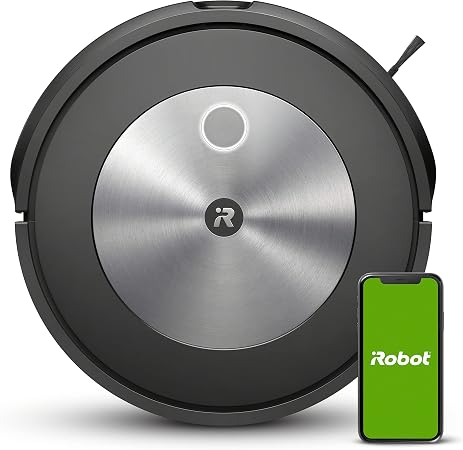
iRobot Roomba j7 - Best Overall
The Roomba j7 is the robot vacuum we recommend to most people. Its PrecisionVision Navigation uses a front-facing camera to identify and avoid common obstacles like pet waste, socks, and charging cables - something cheaper models simply can not do. It connects to the iRobot app, learns your home layout over time, and lets you create no-go zones with a tap. Cleaning performance is strong on both hardwood and carpet, and the 75-minute battery life covers most medium-sized homes in a single pass. The j7 also integrates with Alexa and Google Home for hands-free scheduling. If you have pets or kids - and all the clutter that comes with them - this is the vacuum that will save you from the embarrassing moments cheaper bots create.
What buyers keep mentioning
- PrecisionVision camera avoids pet waste and cables automatically
- Smart mapping creates a persistent floor plan of your home
- Works with Alexa, Google Home, and the full iRobot app ecosystem
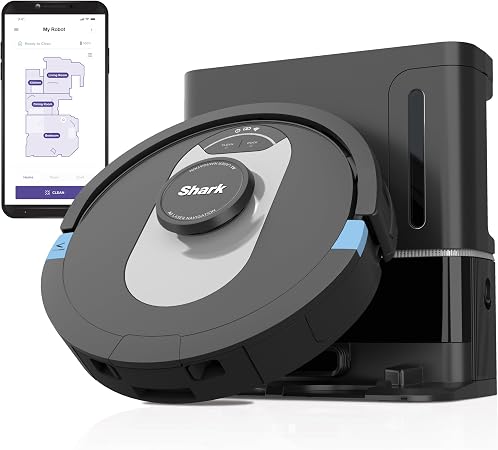
Shark RV2502AE IQ Robot - Best Self-Emptying Value
The Shark RV2502AE is what you buy when you want self-emptying convenience without the premium iRobot price tag. Its bagless base holds up to 45 days of dirt, so you can genuinely forget about emptying it for weeks. The IQ Navigation uses a matrix of sensors to map your home row by row rather than bouncing randomly, resulting in methodical and thorough coverage. It handles pet hair exceptionally well thanks to its self-cleaning brushroll design that resists tangles. You get Wi-Fi connectivity, Alexa support, and the SharkClean app for scheduling and mapping. At its price point, the value is hard to beat - you get most of what the flagship models offer at a noticeably lower cost.
What buyers keep mentioning
- Self-emptying base holds 45 days of debris - no daily emptying
- Self-cleaning brushroll prevents hair tangles that slow other robots down
- Systematic row-by-row cleaning leaves no missed patches
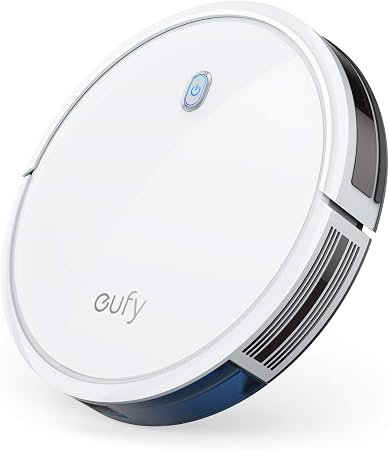
eufy RoboVac G30 - Best Budget Pick Under $200
The eufy RoboVac G30 punches well above its price class. It uses BoostIQ technology to automatically increase suction when it detects carpet, then dial it back on hard floors to conserve battery. The 2,000 Pa suction is genuinely strong for this price range, and the 100-minute runtime handles most apartments and smaller homes in one go. Smart Dynamic Navigation means it follows a planned path rather than wandering, so cleaning is efficient. You get app control, voice assistant compatibility, and a low 2.85-inch profile that slides under most furniture. If you want a capable daily driver without spending $300 or more, the G30 is the honest answer.
What buyers keep mentioning
- BoostIQ auto-adjusts suction between carpet and hard floors
- 2,000 Pa suction rivals vacuums costing twice as much
- Slim 2.85-inch body fits under couches and bed frames easily
iRobot Roomba i3+ - Best for Pet Hair and Allergens
The Roomba i3+ combines solid pet hair performance with the convenience of an automatic dirt disposal base. Its dual rubber brushes are designed specifically to pull pet hair from carpet without tangling, and the three-stage cleaning system agitates, brushes, and suctions in sequence for a deeper clean than single-pass robots. The Clean Base empties automatically after each run and uses AllergenLock bags that trap 99% of allergens - a real benefit if anyone in your home has allergies or asthma. Smart mapping learns your home over multiple runs and improves its routes over time. It is a solid mid-range choice for pet owners who want reliable daily cleaning.
What buyers keep mentioning
- Dual rubber brushes designed to handle pet hair without tangling
- AllergenLock disposal bags trap 99% of pollen, mold, and dust mite allergens
- Automatic dirt disposal means hands-off operation for weeks at a time
eufy RoboVac 11S - Best Ultra-Slim Option
At just 2.85 inches tall, the eufy RoboVac 11S is the thinnest robot vacuum on this list and one of the quietest available at under 55 dB. It is the right pick for homes with lots of low-clearance furniture where other robots simply can not reach. The 1,300 Pa suction is sufficient for daily maintenance on hardwood, tile, and low-pile carpet. It runs up to 100 minutes per charge and returns to its dock automatically. There is no smart mapping or app control - this is a straightforward, reliable vacuum at a price that makes it almost disposable. For a second-floor bedroom or a studio apartment, the 11S just works.
What buyers keep mentioning
- 2.85-inch slim profile slides under most furniture without issue
- Whisper-quiet operation under 55 dB - runs while you work or sleep
- Simple one-button operation with no app required
Our Verdict
For most households, the iRobot Roomba j7 is the smartest investment - its obstacle avoidance alone saves you from disasters that cheaper models create. If self-emptying is the priority and budget matters, the Shark RV2502AE delivers excellent value. Pet owners will appreciate the Roomba i3+ with its allergen-trapping disposal bags. And if you just need a simple, slim daily runner without spending much, the eufy RoboVac 11S or G30 both earn their place on this list. Any of these five will keep your floors cleaner with less effort than you put in today.
We earn a small commission if you purchase through our links, at no extra cost to you.
How We Ranked These Picks
We do not rank robot vacuums by star rating alone, and this category is the clearest example on the whole site of why that rule exists. A near-perfect score from a few hundred reviews is lying, or at least it is telling you a story that has not survived contact with three years of daily use in real houses. What we look at instead is the relationship between three numbers: the average rating, the number of ratings behind it, and how stable that score stays as the sample grows. A score earned across tens of thousands of buyers has already absorbed the failures, the returns, the app outages, and the angry one star updates posted eight months after purchase. A score earned across a few hundred buyers has absorbed almost none of that.
For this guide we analyzed the listing data for the three machines that carry enough review volume to say anything honest about: the iRobot Roomba j7, the Shark RV2502AE AI Ultra self-empty robot, and the eufy 11S MAX. We compared their review records against the feature sets described in the listing specs and against the themes that reviewers consistently raise. We did not run these machines through an obstacle course, and we are not going to pretend otherwise. What we can do is read a very large body of buyer feedback with more discipline than the average roundup applies.
The ranking you see above weighs capability against the odds that the capability still works in year two. That is a different question from which robot cleans best on day one, and it produces a different answer.
The Rating Trap in This Category
Here is the uncomfortable fact we are not going to hide: robot vacuums carry lower average ratings than almost every other category we cover on this site. Robot vacuums are noticeably lower-rated than air fryers, dash cams, or cheap everyday tech, and that includes the top pick in this very guide, the Roomba j7. If you came here expecting a wall of near-perfect scores, the honest answer is that the wall does not exist, and any roundup showing you one has quietly filtered out the products that tell the truth.
There are four reasons the numbers look like this, and each one should change how you shop.
They fail after a few months rather than on arrival. Most product categories generate reviews within two weeks of delivery, when the buyer is happiest. Robot vacuums generate a second wave of reviews at the six to eighteen month mark, and that wave is brutal. Motors, side brush gearboxes, bumper sensors, and above all batteries wear out under daily cycling. A vacuum that ran perfectly for five months and then started refusing to dock gets its rating revised downward by a customer who already lost the receipt. Categories without moving parts never take this second hit.
App and connectivity problems get scored as product problems. A robot vacuum is a cloud service wearing a plastic shell. When the app updates and the map disappears, when the 2.4 GHz handshake fails after a router change, when the scheduled clean silently stops firing, the buyer does not write a one star review of the app. They write a one star review of the vacuum. Reviewers consistently mention connectivity and app regressions as the trigger for their rating change, and the more features a machine has, the more surface area it exposes to this. That is part of why the simplest machine in this guide has the best score.
Consumables cost real money and nobody warns buyers. Filters, side brushes, main brush rolls, mop pads, and for self-empty models the disposable dirt bags all have to be replaced on a schedule. Buyers who did not budget for that feel ambushed, and ambushed buyers leave three star reviews even when the machine is working exactly as designed. Bagged self-empty bases are the most common complaint of this type because the bags are proprietary and recurring.
Expectations are set absurdly high. Marketing for this category promises a house that cleans itself. What you actually get is a machine that maintains an already tidy floor. Anyone who bought one to replace an upright vacuum, or expected it to deep clean thick carpet, or thought it would navigate a room full of cables and toddler debris without help, is going to be disappointed no matter which model they picked. A large share of the negative reviews in this category are not really about defects at all.
Now apply that lens to the actual numbers. The eufy 11S MAX is the least capable machine in this guide. It has no camera, no LiDAR, no persistent map, no app-based no-go zones, and no self-empty base. It bounces around semi-randomly and it is thin enough to get under furniture. It also has a far larger and steadier review history than anything else here, by an enormous margin the largest and therefore most trustworthy sample. It scores highest precisely because it has the fewest ways to break your expectations. There is no app to regress, no map to lose, no obstacle recognition to fail, and no proprietary bag to buy. Simplicity is not a consolation prize in this category. It is a durability strategy.
Meanwhile the Roomba j7 and the Shark RV2502AE are the two most capable machines and the two lowest scored. Notice also the gap in sample size. The Shark draws on a thin sample by this category's standards, thin enough that its score could move in either direction as volume grows. We would not treat the small gap between the Shark and the Roomba as meaningful. We would treat the wider gap between the eufy and both of them as meaningful, because it is backed by a far larger pool of reviews.
What Actually Matters When You Buy
Total Cost of Ownership, Not Sticker Price
The purchase price is the smallest number in this decision over a three year horizon. Every robot vacuum consumes filters and side brushes on a rolling basis. Main brush rolls wear down. Mop pads, if the model has them, need washing or replacing. Batteries degrade and on many models are not user-replaceable at all, which converts a battery failure into a whole-unit replacement. Before you commit to a model, look up what its replacement parts cost and whether third party equivalents exist, because a machine locked to proprietary consumables will quietly outspend a cheaper machine within two years.
Self-empty models add a second recurring line item. Bagged bases need proprietary dirt bags at a steady cadence, and heavy pet households burn through them fastest, which is exactly the household that wanted self-empty in the first place. Bagless bases such as the one described in the Shark RV2502AE listing remove that recurring cost, and that is a genuine and underrated advantage over bagged systems. The tradeoff is that emptying a bagless bin releases dust into the air, which matters if anyone in the house has allergies.
Self-Empty Bases: What You Are Really Buying
A self-empty base does not make the robot clean better. It changes how often you have to think about it. On a small dustbin robot without a base, you are emptying by hand every one to three runs. With a base, that drops to weeks. For a person with pets, shedding season, or simple unwillingness to maintain an appliance, that is the difference between a machine that stays in the rotation and one that ends up in a closet.
The costs are real though. Bases are large, loud during the evacuation cycle, need a permanently clear wall location with mains power, and add a second failure point. Clogged evacuation tubes are a common complaint theme. If you live in a small apartment, or your only sensible dock location is in a bedroom, a self-empty base may be a downgrade rather than an upgrade.
LiDAR Versus Camera Navigation
These are two different philosophies and neither one wins outright. LiDAR uses a spinning laser turret to measure distances, which produces fast, accurate room mapping and works perfectly in total darkness. That is its decisive advantage: a LiDAR robot can run a clean at 2 a.m. in a pitch black house. Its weakness is that it sees geometry, not identity. A LiDAR map knows there is an object on the floor. It does not know whether that object is a sock or a cable or something far worse left by the dog.
Camera-based systems like the PrecisionVision navigation described in the Roomba j7 listing approach it from the other direction. They identify what an object actually is and steer around the specific things that ruin a cleaning session. The tradeoff is that cameras need light, so low-light performance degrades, and mapping is generally slower to converge than a laser scan. Plenty of newer machines fuse both. If your floors are usually clear, LiDAR is the more reliable navigator. If your floors have pets and children on them, obstacle identification is worth more than mapping precision.
Suction Numbers and Why They Mislead
Pascal ratings get quoted constantly and deserve less weight than they get. The eufy 11S MAX lists 1300 Pa in its product name. Higher-spec machines advertise multiples of that. Real pickup depends on brush design, the seal between the unit and the floor, airflow path, and how full the bin already is, and manufacturers measure Pa under conditions they choose themselves. Comparing Pa across brands is closer to comparing marketing departments than comparing vacuums. Use it to compare two models within a single brand's lineup and ignore it across brands.
Privacy and Home Mapping
This is the part most buying guides skip. A mapping robot vacuum builds a detailed floor plan of your home, including room dimensions, furniture placement, and traffic patterns, and on most connected models that map is stored in the manufacturer's cloud rather than only on the device. Camera-based navigation adds image capture inside your home to the equation. Vendors publish policies describing how that data is handled and there have been well-documented industry incidents involving images captured by development units, which is why the topic deserves a sentence in an honest guide rather than silence.
You do not have to be alarmed to be deliberate about this. Read the privacy policy of the specific brand before you buy, check whether the map can be deleted and whether the account can be closed cleanly, and decide whether you want a camera operating inside your home at all. If the answer is no, that conclusion pushes you toward the simplest machines in the category, which is the same direction the review data already pushes. The eufy 11S MAX has no camera and no persistent mapping, so the question mostly evaporates.
Head to Head: Roomba j7 vs eufy 11S MAX
| Spec | iRobot Roomba j7 | eufy 11S MAX |
|---|---|---|
| Review history | A much smaller pool of reviews | A far larger and steadier review history |
| Sample confidence | Moderate | Very high |
| Navigation | PrecisionVision camera with obstacle identification | Bump and sensor based, no mapping |
| Persistent home map | Yes, app based | No |
| App dependency | High | Low, remote control works without cloud |
| Camera in the home | Yes | No |
| Listed suction | Not stated in listing | 1300 Pa |
| Self-empty base | Not included with this model | No |
| Best suited to | Cluttered homes with pets and children | Tidy floors, low furniture clearance, minimal fuss |
The table makes the real decision visible. The j7 is the more capable machine and nothing in the review data contradicts that. What the data does say is that capability in this category carries a reliability and satisfaction penalty, and the j7's lower score from a much smaller pool of reviews is that penalty showing up in public. The eufy's higher score across a far larger and steadier review history is not evidence that it cleans better. It is evidence that far more people stayed happy with it over time, across a sample so large that it has already priced in the failures. Buy the j7 because you specifically need obstacle identification and mapping, with clear eyes about the score. Buy the eufy if you want the machine most likely to still be quietly working in three years.
The Shark RV2502AE sits between them on capability and near the bottom on sample size. Its bagless self-empty base is the strongest argument for it, because it delivers the convenience of self-empty without committing you to proprietary bags forever. With a much smaller pool of reviews than the other two, though, we would call its score provisional. That is not a condemnation. It is a statement that we do not yet have enough data to be confident either way, and you should weigh it accordingly.
Who Should Skip This Category Entirely
Plenty of people should not buy a robot vacuum at all, and no roundup that wants your click will tell you so. Skip it if you expect deep cleaning. These machines maintain floors between real vacuum sessions. They do not replace an upright on thick carpet, stairs, or ground-in dirt, and buying one as a replacement is the single most common source of disappointment in the review data.
Skip it if your floors are genuinely cluttered and you are not willing to change that. The pre-clean tidy is real work. Cables, socks, toy parts, and rug tassels all end up wrapped around a brush roll. Obstacle identification reduces the problem but does not eliminate it. If you will not clear the floor before a run, you are buying a machine that will jam and then sit unused.
Skip it if your home is mostly stairs, if you have deep shag or very thick high-pile carpet that these units cannot climb or seal against, or if the only place to dock is somewhere the noise would be unacceptable. Skip it if you are unwilling to perform maintenance, because brush hair removal, filter cleaning, and sensor wiping are not optional and a neglected unit degrades fast. And skip connected models specifically if cloud storage of a floor plan of your home is something you are not comfortable with. In that case a basic non-mapping unit is the right compromise, not a premium one.
Common Mistakes Buyers Make
- Treating a high star rating from a few hundred reviews as equivalent to a slightly lower rating from tens of thousands. In this category the large sample is almost always the more honest number.
- Ignoring the second review wave. Sort reviews by most recent rather than most helpful, and look specifically for updates written six or more months after purchase. That is where this category tells the truth.
- Budgeting only for the purchase and not for filters, brushes, mop pads, and self-empty bags across three years of ownership.
- Buying a self-empty base for a small apartment where the dock's size, its noise during evacuation, and its need for a permanent powered wall spot outweigh the convenience.
- Comparing Pascal suction figures across different brands as if they were measured the same way. They are not.
- Assuming obstacle avoidance means you never have to tidy up first. It lowers the failure rate. It does not make the floor self-clearing.
- Choosing a camera-navigation model without reading the manufacturer's privacy policy on stored home maps and captured images.
- Ignoring furniture clearance. Measure the gap under your couch and bed before buying, because a unit that cannot fit under the furniture it needs to clean is the wrong unit regardless of its rating.
- Expecting a mopping function to replace actual mopping. On most combo units it is a damp pad dragged across the floor and it handles light dust, not spills or sticky residue.
- Dismissing the simplest model in the lineup. In robot vacuums, fewer features consistently correlates with higher long-term satisfaction.
Frequently Asked Questions
Why are robot vacuum ratings lower than other product categories?
Because they fail in the middle of their life rather than at the start. Most categories collect reviews in the first two weeks, when satisfaction peaks. Robot vacuums collect a second wave at six to eighteen months, when batteries fade, brush gearboxes wear, and app updates break saved maps. Add recurring consumable costs that buyers did not expect and marketing that promises a self-cleaning house, and the averages land in the high threes and low fours rather than the mid fours you see elsewhere on this site.
Is the eufy 11S MAX really better than the Roomba j7?
It is not more capable, and it is more trusted. The j7 identifies and avoids obstacles and builds a persistent map, which the eufy cannot do. But the eufy has a far larger and steadier review history, while the j7 is rated lower across a much smaller pool of reviews. The eufy has far fewer ways to disappoint someone: no app-dependent map to lose, no camera, no proprietary base. If you need obstacle identification, buy the j7 and accept the score. If you want the highest odds of a machine that still works in year three, the eufy's sample size is the strongest signal in this entire guide.
How much do robot vacuum consumables cost per year?
We will not invent a figure, because it varies enormously by brand and by how hard you run the machine. What we can tell you is what you need to price out before buying: filters, side brushes, the main brush roll, mop pads if the model mops, and disposable dirt bags if the base is bagged. Check whether third party replacements exist for your specific model, since brands that lock you to proprietary parts can cost more in consumables over three years than the gap between two models' purchase prices.
Is a self-emptying base worth it?
It is worth it if you have pets, a large home, or a low tolerance for appliance maintenance, because it changes hand-emptying from every couple of runs to every few weeks. It is not worth it in a small apartment, where the dock's footprint, the loud evacuation cycle, and the need for a permanent powered wall location outweigh the benefit. Bagless bases like the one in the Shark RV2502AE listing avoid the recurring bag cost, which is a real advantage, but emptying one does release dust into the air.
Is LiDAR better than camera navigation?
They solve different problems. LiDAR maps rooms quickly and accurately and works in complete darkness, but it only sees shapes, so it cannot tell a sock from a charging cable from a pet accident. Camera systems identify what objects actually are and steer around the ones that ruin a run, but they need light and map more slowly. Clear floors favor LiDAR. Floors with pets and kids on them favor obstacle identification.
Do robot vacuums store a map of my house?
Mapping models do, and on most connected units that map lives in the manufacturer's cloud rather than only on the device. It typically includes room layout, dimensions, and furniture positions, and camera-based navigation adds image capture inside your home. Read the specific brand's privacy policy before buying, confirm you can delete the map and close the account, and if that arrangement bothers you, choose a non-mapping model like the eufy 11S MAX, which has no camera and builds no persistent floor plan.
Can a robot vacuum replace my regular vacuum?
No, and treating it as a replacement is the fastest route to a disappointed review. These machines maintain floors between real cleaning sessions. They do not deep clean thick carpet, they cannot do stairs, and they struggle with ground-in dirt and edges. Buy one to reduce how often you drag out the upright, not to retire it.
Does a higher Pa suction number mean better cleaning?
Not reliably across brands. The eufy 11S MAX lists 1300 Pa, and other machines advertise far higher figures, but each manufacturer measures under conditions it selects itself. Actual pickup depends on brush design, the floor seal, airflow path, and how full the bin already is. Pascal figures are useful for comparing two models inside one brand's own lineup and close to meaningless between brands.
How long do robot vacuum batteries last?
Rechargeable batteries in daily-cycled appliances degrade over time, and shorter runtime after a year or two is the single most common theme in the late-arriving negative reviews across this category. Before buying, check whether the battery on your chosen model is user-replaceable and whether the part is sold separately. On units where it is not, a worn battery effectively ends the machine's life, and that risk should factor into which model you pick.