If you're shopping for an air fryer in 2026, the choices can be overwhelming. We analyzed the top rated models on Amazon to save you time and money.
Our Top Rated Air Fryer Picks
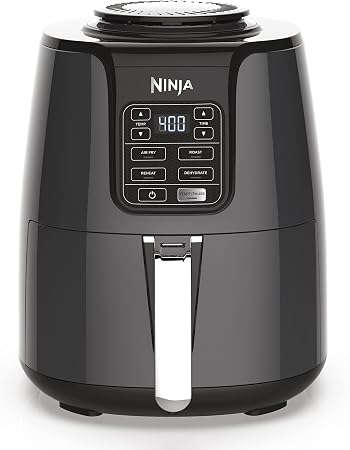
Ninja AF101 Air Fryer - Best Overall
The Ninja AF101 consistently tops our list for a reason. It delivers crispy results every time with minimal oil.
What buyers keep mentioning
- 4-quart capacity - perfect for 2-4 people
- Wide temperature range: 105°F to 400°F
- Dishwasher-safe parts
- Compact footprint

COSORI Pro II Air Fryer 5.8QT - Best Value
The COSORI Pro II punches well above its price point with 12 cooking functions and a sleek design.
What buyers keep mentioning
- 5.8-quart large capacity
- 12 one-touch savable custom functions
- Square basket fits more food
- Works with Alexa and Google Assistant
Instant Vortex 4-in-1 - Best for Beginners
If you're new to air frying, the Instant Vortex is the most beginner-friendly option on this list.
What buyers keep mentioning
- Simple one-touch controls
- Air fry, roast, bake, and reheat functions
- 6-quart capacity
- Easy to clean
Quick Comparison Table
| Model | Capacity | Best For |
|---|---|---|
| Ninja AF101 | 4 qt | Overall best |
| COSORI Pro Gen 2 | 5.8 qt | Best value |
| Instant Vortex | 6 qt | Beginners |
Our Verdict
For most people, the Ninja AF101 is the best air fryer on Amazon right now. It's reliable, easy to use, and produces consistently great results.
If you cook for a larger family, go with the COSORI Pro Gen 2 for its larger capacity and extra features.
We earn a small commission if you purchase through our links, at no extra cost to you. This helps us keep TopRatedPick running.
How We Ranked These Picks
Star ratings are the laziest signal in the kitchen appliance market, and air fryers are where that laziness costs the most money. A basket fryer is a high-cycle product. People use it three to six times a week, drop the basket in the dishwasher, slam the drawer shut with a wrist flick, and expect the nonstick coating to survive two years of that. None of that stress shows up in the first thirty days of ownership, which is exactly the window where most reviews get written. So we do not rank by the number on the badge. We rank by how much weight that number can actually carry.
The method has three legs. First, review volume as a confidence floor. A high average built on a review history as long as the Ninja AF101's is a different statistical object than the same average built on a few hundred ratings. The large sample has already absorbed shipping damage, dead heating elements, bad batches, and the angry minority who expected restaurant fries. The small sample has absorbed nothing except early enthusiasm. Second, score stability across time. We read how the recent slice of feedback compares to the lifetime average. When a model's newer reviews trend visibly below its lifetime score, that usually means a running production change, a supplier swap on the coating, or a control board revision. Third, the shape of the complaint cluster. We read the one and two star reviews as a group and ask whether the failures are random or repeated. Random noise is tolerable. A repeated failure at a repeated point in the ownership timeline is a design problem.
We did not cook anything for this guide, and you should be suspicious of any site that claims it did while reviewing dozens of models a month. What we did was compare listing specifications against the aggregated experience of tens of thousands of buyers, then weigh the two picks that survived. The Ninja AF101 and the COSORI Pro II 5.8QT are the models in our product data with enough review mass to say anything honest about, so those are the ones we will hold to the fire below.
The Rating Trap in This Category
Here is the specific way air fryer ratings mislead you. The category has an unusually front-loaded satisfaction curve. Someone who has been baking frozen fries in a conventional oven for fifteen years buys a basket fryer, makes wings in eighteen minutes, and the delta feels enormous. That person rates five stars in week one. The appliance has not yet been asked to do anything hard. The coating has not been scraped. The fan bearing has not accumulated grease. The basket release has not been pressed nine hundred times. Ratings collected in that honeymoon window inflate the whole category, which is why a 4.5 average in air fryers is closer to mediocre than it would be in, say, cordless drills.
The second trap is capacity language. Manufacturers state basket volume, not usable cooking area, and those are not the same thing. A 5.8 quart round basket and a 5.8 quart square basket hold the same water and a very different number of chicken thighs, because air frying requires a single layer with airflow around each piece. Stack food and you are steaming it. This is why the COSORI Pro II's square basket matters more than the quart number suggests, and it is also why buyers who bought purely on quarts show up in review sections confused about why their food came out pale. The listing did not lie. It just measured the wrong thing for the job.
The third trap is the review that is really about the user. Scroll any air fryer's one star cluster and a large share reads like operator error: food crowded into the basket, no preheat, wet battered items dumped into a convection device that was never designed for wet batter. Those reviews drag averages down without telling you anything about build quality. Conversely, five star reviews written after a single bag of frozen tater tots tell you nothing either. The usable signal sits in the three and four star reviews, where people who still like the product describe exactly what annoys them. That is where the honest trade-offs live, and it is the part almost nobody reads.
What Actually Matters When You Buy
Usable Basket Area, Not Quarts
Decide how many people you feed on a normal Tuesday and work backward. The Ninja AF101 is a 4 quart unit, which the listing describes as suiting two to four people, and that is roughly honest if "four people" means four people eating a side dish rather than four people eating a main. Two chicken breasts and a handful of vegetables is a comfortable load. A whole family's dinner in one pass is not. The COSORI Pro II at 5.8 quarts with a square basket gives you meaningfully more single-layer surface, which is the number that actually governs throughput. If you are cooking for four adults regularly, the smaller unit will force you into two batches, and two batches means the first one is lukewarm by the time the second lands.
Temperature Floor, Not Just Ceiling
Almost every unit hits 400F. That is table stakes and it is not a differentiator. The interesting number is the bottom of the range. The Ninja AF101 specifies 105F to 400F according to the listing spec, and that low end is what makes dehydrating, proofing, and gentle reheating possible without turning leftovers into jerky. A fryer that starts at 180F cannot do those jobs at all. If you only ever reheat pizza and cook frozen food, the floor is irrelevant and you should not pay for it. If you want the appliance to replace a second oven for slow tasks, it is the single spec most worth checking.
Cleanup Reality
Dishwasher-safe parts, which both of our picks advertise, are worth more than any preset menu. The realistic failure mode of an air fryer is not that it breaks. It is that it stops getting used because cleaning it is a chore, and it migrates to a cabinet. Look for a basket and crisper plate that both come out and both go in the dishwasher, and check whether the heating element above the basket is reachable with a cloth. Grease aerosolizes, lands on that element, and burns on the next cycle. That is the source of the "my air fryer smells" complaints that cluster across every brand in the category.
Presets Versus Manual Control
The COSORI Pro II carries 12 one-touch functions and works with Alexa and Google Assistant. Presets are genuinely useful for the first month while you learn the machine, and mostly ignored afterward by people who cook regularly. Voice control on a device you must physically load and physically shake is close to decorative. Do not let either feature outweigh basket geometry or temperature range. Buy presets if a household member is nervous around appliances and wants a button that says "fries." Do not buy them expecting better food.
Noise and Counter Footprint
Every basket fryer is a small convection oven with a loud fan, and reviewers consistently mention noise in the three star bracket across brands. There is no silent model at this price. What you can control is where it lives. Measure your counter depth and your upper cabinet clearance before ordering, because these units vent hot air upward and backward and need real clearance to avoid cooking the underside of your cabinets. A compact footprint, which the Ninja's listing emphasizes, is a genuine feature in a small kitchen and irrelevant in a large one.
Head to Head: Ninja AF101 vs COSORI Pro II 5.8QT
| Spec | Ninja AF101 4QT | COSORI Pro II 5.8QT |
|---|---|---|
| Review history | Very long, the larger of the two | Long |
| Capacity | 4 quarts | 5.8 quarts |
| Basket shape | Standard basket | Square basket, more single-layer area |
| Temperature range | 105F to 400F per listing | Not specified in listing data |
| Presets | Minimal, manual control | 12 one-touch functions |
| Smart home | None | Alexa and Google Assistant |
| Cleanup | Dishwasher-safe parts | Dishwasher-safe parts |
| Best suited to | 1 to 3 people, small counters | 3 to 5 people, batch cooking |
The honest read: the Ninja wins on confidence and loses on capacity. Its slightly higher average rests on a noticeably longer review history than the COSORI's, and at that sample size the difference in average is statistically small but the difference in evidence volume is not. If you want the lowest-risk purchase in this guide, the Ninja is it. The COSORI usually costs a little more and buys you 1.8 quarts plus a basket shape that uses them better, which for a household of four is worth far more than the small price difference. The feature list is also longer, though most of that length is presets you will stop pressing. Choose by household size first, and let the rating difference break the tie only if you are genuinely between the two.
Who Should Skip This Category Entirely
Plenty of people should not buy an air fryer, and the category's marketing never says so. If you already own a countertop convection toaster oven that you like, you own an air fryer with worse airflow and better versatility, and a second box is mostly redundant. If your counter space is already contested, understand that these units are used where they sit. A fryer stored in a cabinet gets used roughly never, and the honest outcome is that you paid for a shelf ornament.
Skip it too if your cooking is mostly wet. Air frying is dry convection. Sauces, braises, soups, and batter-dipped food are the wrong jobs, and buyers who expected otherwise are a visible chunk of the negative reviews in every listing. If you cook for six or more, a basket unit at this price will frustrate you into batch cooking every night, and you should be shopping oven-style units with racks instead. And if your motivation is purely health, be clear-eyed: the device cooks with hot air instead of oil, which cuts added fat, but it does not change what the food is. Frozen nuggets are frozen nuggets at 400F.
One more group: anyone who will not read the manual and will not preheat. The category's satisfaction gap between people who preheat and people who do not is wide enough to see in the review text. If that sounds like a chore you will skip, buy the cheapest unit you can find and set expectations accordingly, because the premium features will not rescue the workflow.
Common Mistakes Buyers Make
- Buying on quarts alone. Usable single-layer area determines how much food actually cooks well. A square basket beats a round one of equal volume for most meals.
- Overfilling the basket. Food needs airflow on all sides. Crowding turns air frying into steaming, and this is the single most common cause of disappointed first impressions.
- Skipping preheat. Two to three minutes of preheat changes the texture outcome more than any preset does.
- Trusting a high average with a thin rating count. A 4.8 on a few hundred ratings has not been stress tested by reality. A slightly lower average on a long review history tells you far more.
- Using aerosol cooking spray on the nonstick basket. The propellants in many sprays degrade coatings, and coating failure is the top long-term complaint in this category. Brush or toss food with oil instead.
- Ignoring cabinet clearance. These vent hot air upward and rearward. Installed too tight, they cook the cabinet above and trip their own thermal limits.
- Cutting food in the basket. Metal against nonstick is how a two-year appliance becomes a one-year appliance.
- Paying for smart features you will never trigger. Voice control on a device you must load and shake by hand adds price, not capability.
- Assuming a bigger unit is strictly better. Larger baskets take longer to come to temperature and waste energy on small loads.
Frequently Asked Questions
Is a 4 quart air fryer big enough for a family of four?
Usually not for a main course in one pass. The Ninja AF101's listing describes 4 quarts as suiting two to four people, which is fair for sides or for two adults plus two small children. If four adults are eating a protein plus a vegetable, you will cook in two batches. For that household the 5.8 quart COSORI Pro II with its square basket is the more practical buy, and the modest price gap between the two is small next to nightly batch cooking.
Does a higher star rating always mean a better air fryer?
No, and this category is a good example of why. The Ninja AF101 averages slightly higher than the COSORI Pro II, but the gap is a fraction of a star and almost meaningless on its own. What matters is that both scores rest on a long review history, so both have been tested by real ownership rather than early enthusiasm. A near-perfect score on a few hundred ratings would be a weaker signal than either of these, because nothing has had time to fail yet.
Why does my air fryer food come out soggy instead of crispy?
Almost always crowding, moisture, or no preheat. Air frying is convection, so every surface needs moving hot air. Pat food dry, toss it in a light coat of oil, arrange it in a single layer with gaps, preheat the unit, and shake the basket partway through. If you are cooking something wet or battered, the appliance is the wrong tool and no setting will fix it.
Do I need the 12 preset functions on the COSORI Pro II?
Probably not after the first few weeks. Presets are time and temperature combinations you can dial in manually in about four seconds. They genuinely help someone who is nervous about the machine or who wants a household member to cook without asking questions. If you already cook confidently, treat the presets as a tiebreaker rather than a reason to pay more, and weight basket size and shape more heavily.
How long does an air fryer actually last?
The limiting part is the nonstick coating, not the motor or the element. Buyers report coating wear as the dominant long-term complaint across brands in this price band, and it is accelerated by aerosol sprays, metal utensils, and aggressive scrubbing. Treat the basket like a good nonstick pan and you extend its life considerably. Treat it like a roasting tray and you will be shopping again sooner than you planned.
Is an air fryer cheaper to run than my oven?
For small loads, generally yes, because you are heating a much smaller cavity and reaching temperature far faster. The advantage shrinks as the load grows, and for a full sheet pan of food a conventional oven is often the more efficient choice. The real saving for most households is time rather than electricity, since there is little meaningful preheat wait compared to a full-size oven.
Should I buy a basket model or an oven-style air fryer?
Basket models like both picks here move air more aggressively in a smaller space, so they crisp better per dollar and are easier to clean. Oven-style units give you racks, more total capacity, and the ability to cook two things at once, at the cost of crisping performance and a much larger footprint. If crisping is the point and you cook for one to four people, a basket model is the better buy. If you want one box to replace a toaster oven and a fryer, go oven-style and accept the trade.
Can I put the basket in the dishwasher?
Both models in this guide list dishwasher-safe parts, so yes according to the listing spec. That said, repeated high-heat dishwasher cycles are harder on nonstick than a soft sponge and warm water. The practical approach is to hand wash most of the time and use the dishwasher when something has baked on. The reason dishwasher safety matters is not that you will use it daily. It is that knowing you can removes the excuse that keeps the appliance in a cabinet.